Repairs1 min read
Torn CV boot? Catch it before the joint goes
A torn CV boot is a cheap fix. Leave it, and dust and water grind the joint until it clicks on every turn. How to spot it early and what the repair involves.
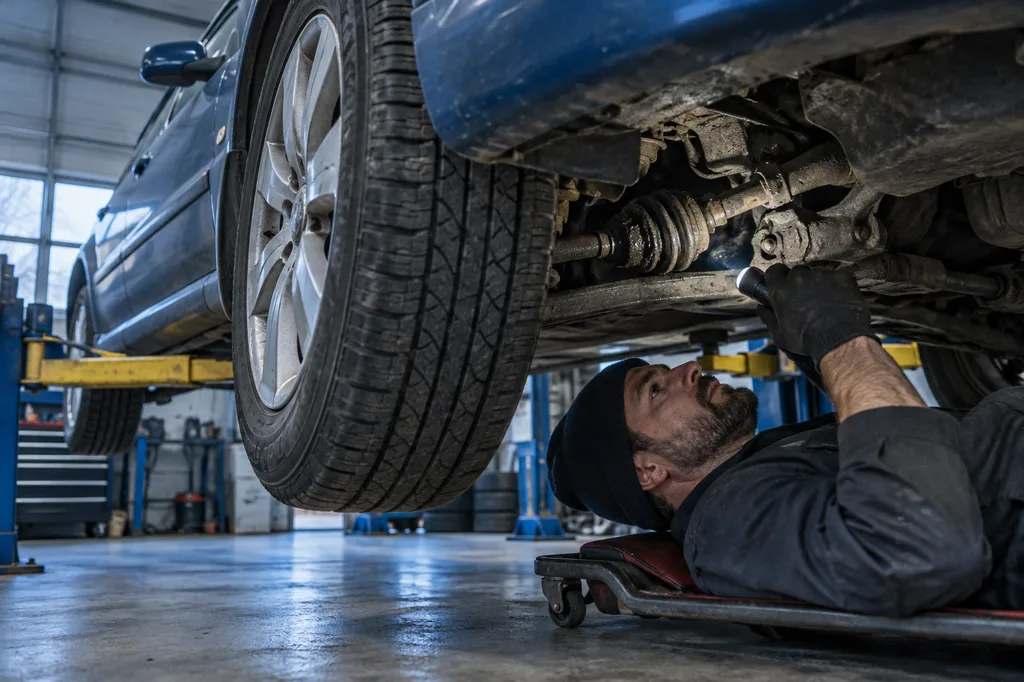
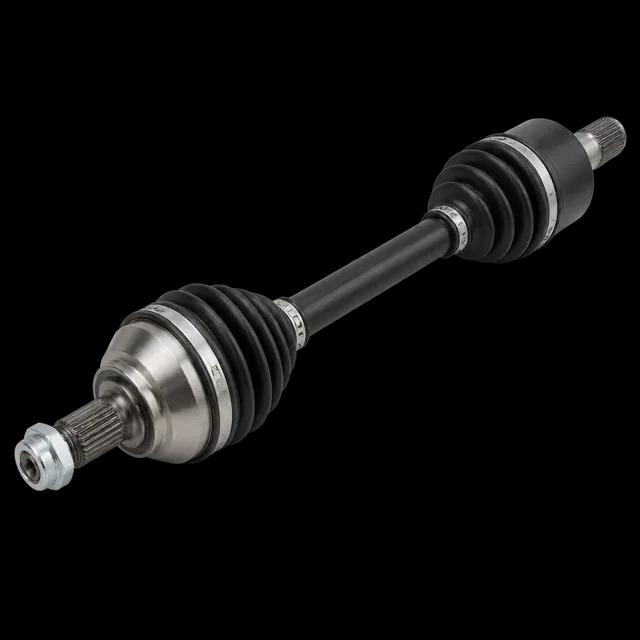
Every Subaru is all-wheel drive, so it has four CV (constant velocity) joints at the front and four at the rear. Each joint is packed with grease and sealed by a ribbed rubber boot. The boot is the weak point: rubber hardens with heat and age, and a stone, a kerb or a rough murram road can split it.
What happens when a boot tears
As the axle spins, grease is flung out through the tear and dust and water get in. Grit mixed with grease becomes a grinding paste. Within weeks to months the joint wears, and a repair that could have been a boot kit becomes a whole new axle.
How to catch it early
Look behind each front wheel with the steering on full lock. A healthy boot is dry and clean.
Grease sprayed on the inside of the wheel, the suspension or the brake parts is the classic sign of a split boot.
Ask your mechanic to check all boots at every service. It takes two minutes on a lift.
Symptoms of a worn joint
Clicking or popping when turning sharply, for example in a parking lot: usually the outer joint
A shudder or vibration when accelerating that eases when you lift off: often the inner joint
A clunk when moving off or changing between drive and reverse
Boot or whole axle?
If the boot has only just torn and the joint is quiet, a new boot and fresh grease is enough. If the joint already clicks, fit a complete axle: the joints, boots and grease come pre-assembled and the job is quicker.
We stock complete front CV axles for common Forester, Impreza and Outback generations. Send us your chassis number and tell us which side, and we will confirm fitment.
Not sure what your car needs?
Send your chassis number and we’ll confirm the right part and price.